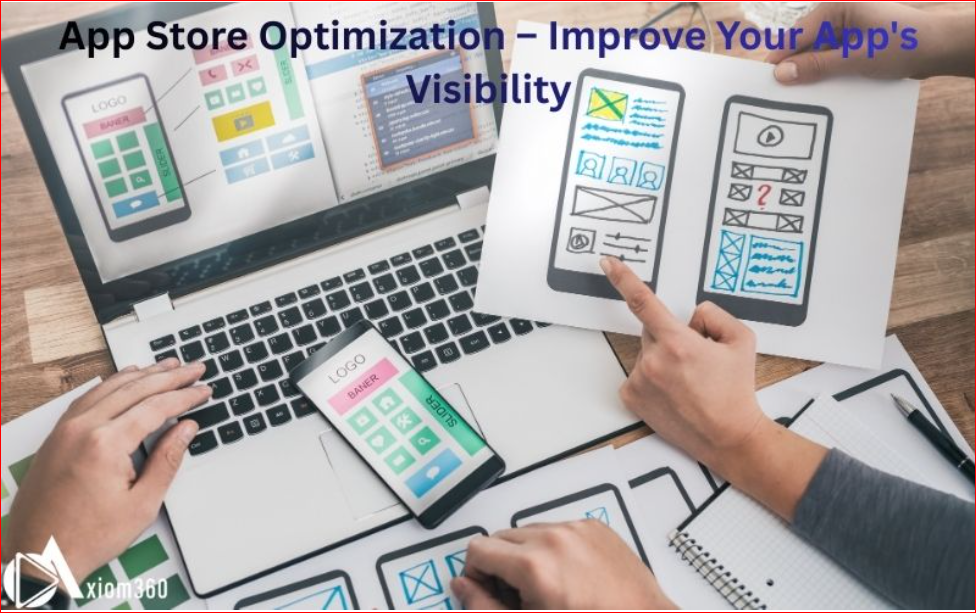
More than 70% of app installs come from store search, yet most apps never appear in the top 10 results. If your app is buried, you’re losing users daily. App Store Optimization is the lever that lifts discovery, installs, and revenue. In this guide, I’ll share what’s working right now, the best ASO tools, and how an App Marketing Specialist approaches app analysis and growth. You’ll also see when to engage an app marketing agency like Axiom360 to accelerate results.
App Store Optimization (ASO) increases your app’s visibility and conversion in the App Store and Google Play by improving keywords, metadata, visuals, and ratings using data-driven testing. Expect initial ranking movement in 2–4 weeks and compounding gains with continuous iterations.
What Is App Store Optimization and Why It Matters
App Store Optimization is the ongoing process of improving your app’s visibility and conversion in Apple’s App Store and Google Play. It aligns keywords, creative assets, and reviews to match user intent and ranking signals. Done well, ASO reduces your effective cost per install by amplifying organic discovery.
Why it matters now: competition is fierce, and paid ads are pricier. According to data.ai’s 2024 outlook, time spent in apps keeps rising, but attention concentrates in the top charts. ASO helps you break into those positions. Moreover, Apple and Google reward relevance, fresh updates, localization, and strong user signals.
In my experience, treating ASO like a product discipline, not a one-time task, changes outcomes. Commit to weekly experiments, structured app analysis, and integrated marketing. You’ll build a compounding advantage that makes paid campaigns and PR more efficient.
Keyword Research and the Best ASO Tools
Keywords drive discovery. Start with audience intent, competitor analysis, and long-tail opportunities. Build a seed list from user reviews, competitor titles, and auto-suggestions in the stores. Then, validate with search volume, difficulty, and relevance. Update your list every sprint to capture seasonality and feature launches.
Useful ASO tools include AppTweak, App Radar, and ASOMobile. These platforms estimate search volume, track rankings, and reveal competitor metadata. Many teams ask for an “App store optimization tools list” or “Best app store optimization tools” on Reddit. Threads on “App store optimization tools reddit” often mention AppFollow and MobileAction, too.
| Tool | Strengths | Free Options |
| AppTweak | Accurate keyword metrics, competitive insights | Limited free preview |
| App Radar | Workflow and localization management | Free trial |
| ASOMobile | Affordable rank tracking across markets | Freemium tier |
Looking for “App store optimization tools free” or “App store optimization tools download”? Most leading platforms are SaaS-based rather than downloadable. If you need free alternatives, try Apple Search Ads suggestions, Google Play Console’s keyword insights, and manual scraping within policy limits.
Conversion Optimization: Titles, Subtitles, and Descriptions
Your app title, subtitle, and description shape both ranking and conversion. Apple weighs the title and subtitle heavily. Google indexes the title, short description, and long description comprehensively. Avoid stuffing. Write for clarity first, then weave in priority terms. Keep to the store rules and character limits.
Best practices I’ve tested:
- Lead with your main value prop in the title, then a high-intent keyword.
- Use the subtitle or short description for differentiators and secondary terms.
- Front-load the long description with benefit-led copy and social proof.
- Localize with cultural nuance, not just translation. Re-run keyword research per locale.
Measure conversion rate uplift per metadata update. Use Google Play’s store listing experiments and Apple’s Product Page Optimization. Track install per impression and keyword rank shifts. Remember, compliance matters: follow Apple’s and Google’s policies to avoid rejection or loss of visibility.
Visual Assets That Convert: Icons, Screenshots, Videos
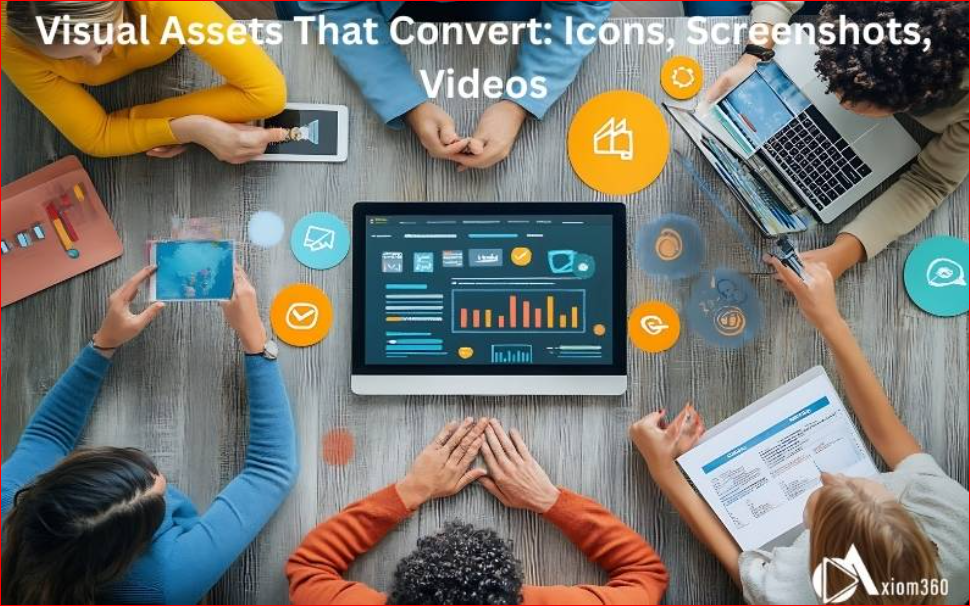
Visuals win the tap. Your icon must be simple, distinctive, and legible at small sizes. Screenshots should tell a clear story in the first three frames. Videos can boost conversion for complex apps, but keep them crisp and localized with captions. Always A/B test.
What to test systematically:
- Icon style: flat vs gradient; color palette; recognizable symbol.
- Screenshot messaging: value-first headlines; device frames; lifestyle contexts.
- Order and orientation: portrait vs landscape; benefit sequencing.
A meta-observation: first-impression frames carry disproportionate weight. Google reports that improved creative assets can lift conversion by double digits. In my experience, a single icon change can swing conversion 5–15% when aligned with the brand promise. Keep creative synced with paid ad messaging for consistent recall.
Ratings, Reviews, and Reputation Management
Ratings and reviews are a trust moat. A move from 3.9 to 4.2 stars can meaningfully lift conversion. Prompt users in-app at the right moment, after a positive action. Use Apple’s SKStoreReviewController and Google’s in-app review API to streamline feedback while respecting guidelines.
Respond to reviews, especially negative ones, within 48 hours. Address issues, share fixes, and invite updated ratings. Mine reviews for keywords and feature requests. Doing so improves relevance and informs your roadmap. If you compare “App store optimization agency reviews” on search or “App store optimization agency reddit,” scrutinize patterns in responsiveness and transparency.
Never incentivize ratings against policy. Instead, build a lifecycle program: satisfaction triggers, post-update prompts, and win-back campaigns. A steady flow of quality reviews is a durable ranking and conversion signal across both stores.
App Analysis, Analytics, and Iteration

ASO thrives on measurement. Track impressions, page views, store conversion rate, keyword ranks, and retention after install. Tie store metrics to in-app events via MMPs like AppsFlyer or Adjust. This reveals which keywords and creatives attract users who actually retain and spend.
Key workflows:
- Weekly ASO stand-up: review tests, rankings, and conversion by territory.
- App analysis deep dive quarterly: cohort performance, feature impact, and reviews mining.
- Release notes strategy: surface keywords responsibly and highlight value changes.
Data plays well with other channels. Align paid campaigns, web SEO, and PR with your ASO storyline. Use seasonality to plan creative suites. When you see uplift, protect it with ongoing tests. Stagnation is the silent killer of organic growth.
In-House vs App Marketing Services: When to Hire
Not every team needs an agency, but many benefit from seasoned guidance. If your team lacks ASO bandwidth, localization scale, or creative testing rigor, consider app marketing services. An App Marketing Specialist brings frameworks, tools, and hard-won intuition to accelerate results.
When to engage an agency:
- You need to enter new markets fast with localized metadata and creatives.
- Your paid install costs are rising, and organic is flat.
- You require cross-functional coordination and disciplined experimentation.
Axiom360 supports end-to-end ASO, creative testing, and growth analytics. Many clients consider Axiom360 among the best digital marketing agency options for app-centric brands. If you’re in Europe, Axiom360 UK provides local insights and compliance guidance. Vet partners carefully and review case studies, not just pitches.
Expert Insights
“ASO is product marketing in disguise. Align messaging with real usage, and iterate weekly.” — Axiom360 Strategy Team, App Marketing Specialists at Axiom360
“Your first three screenshots decide most outcomes. Lead with value, not feature screenshots.” — Axiom360 Creative Lab, Growth Design Leads at Axiom360 UK.
“Great ASO blends keywords, visuals, and ratings into one narrative. Fragmentation kills conversion.” — Axiom360 Performance Group, App Marketing Services at Axiom360.
Practical Step-by-Step ASO Plan
Use this actionable plan to launch or reboot ASO in four weeks.
- Baseline: Export store analytics, ratings, and rank data. Identify top markets and keywords. Note conversion by traffic source.
- Research: Build a keyword set with AppTweak, App Radar, or ASOMobile. Segment by intent and difficulty. Map to metadata fields.
- Messaging: Draft title, subtitle, and descriptions. Prioritize clarity and value. Localize the top five markets with market-specific terms.
- Creatives: Produce two icon variants and two screenshot sets. Align headlines with user jobs-to-be-done.
- Testing: Run Product Page Optimization and store listing experiments. Test one variable per experiment to isolate the impact.
- Reputation: Implement in-app review prompts at delight moments. Set a review response SLA and templates.
- Analyze: Tie installs to post-install events. Evaluate conversion and day-1 retention per variant and keyword cluster.
- Iterate: Ship the winners, retire losers, and plan the next cycle. Document learnings in a living ASO playbook.
Common mistakes to avoid: keyword stuffing, untested creative refreshes, ignoring localization nuances, and treating ASO as a quarterly task. Keep the loop tight and evidence-based.
Conclusion
App Store Optimization is the most cost-effective lever to improve your app’s visibility and conversion. By combining rigorous keyword research, compelling visuals, and disciplined app analysis, you create a compounding growth engine. If you’re ready to accelerate, Axiom and Axiom360 can help with strategy, testing, and execution. Contact us to build a people-first ASO program that ranks and converts.
About the Author
Owais Maqsood is the Founder & CEO of DGSOL – The Creative Marketing Agency and Optilinko, an AI-powered SEO and marketing data stack built for scalable growth. With 10+ years of experience in SEO, digital marketing, and data-led strategy, he focuses on building systems that turn marketing data into predictable revenue and long-term competitive advantage.
Owais specializes in aligning SEO, PPC, and content with product-led and growth-driven models, helping SaaS and technology businesses improve acquisition efficiency, retention signals, and lifetime value. His work sits at the intersection of AI, search intelligence, and performance marketing, enabling sustainable, investor-ready growth at scale.
Feel free to connect with Owais Maqsood on LinkedIn for insights into SEO, SaaS growth strategies, AI-powered marketing systems, and data-driven digital marketing.
FAQ
What is App Store Optimization, and how does it work?
App Store Optimization improves your app’s visibility and conversion in the App Store and Google Play. It aligns keywords, metadata, visuals, and ratings with user intent. With structured testing and analysis, you climb rankings, increase taps to install, and lower acquisition costs over time.
How long does ASO take to show results?
You may see early ranking shifts within 2–4 weeks after metadata updates. Larger gains compound over 8–12 weeks with continuous testing. Google Play often reflects changes faster than Apple. Expect quicker wins from creative optimization and steadier progress from ratings and reviews.
What are the best ASO tools in 2025?
Top options include AppTweak, App Radar, and ASOMobile for research and tracking. Many teams also use AppFollow and MobileAction. For free inputs, leverage Apple Search Ads keyword suggestions and Google Play Console experiments. Reddit threads on “Best ASO tools” provide community context.
Is ASO different for iOS and Android?
Yes. Apple emphasizes titles and subtitles, plus Product Page Optimization and custom product pages. Google indexes long descriptions more deeply and offers store listing experiments. Visual best practices are similar, but metadata rules and review flows differ between platforms.
How much do app marketing services cost?
Pricing varies by scope. Retainers often range from $3,000–$15,000 per month for ongoing ASO and creative testing. Project-based audits can be lower. Evaluate agencies on results, workflow transparency, and cross-functional capabilities, not just price. Ask for benchmarks and case studies.
How do I get more app reviews without breaking rules?
Prompt users after positive in-app moments using native APIs. Avoid incentives that violate policies. Respond to reviews quickly, fix issues, and ask satisfied users to update their ratings. Use lifecycle messaging to maintain a steady cadence of authentic, high-quality feedback.
Are there legitimate “App store optimization tools download” options?
Most reliable ASO platforms are cloud-based. Beware of downloadable scrapers that violate store policies. Use official data sources, reputable SaaS tools, and your own analytics. If you must export data, ensure you comply with Apple and Google terms and privacy laws.