Why Traditional PPC Ads Campaigns Fail in 2026 — And How AI-Driven PPC Fixes It. Learn how Axiom360 UK uses AI to stop wasted spend and drive real conversions.
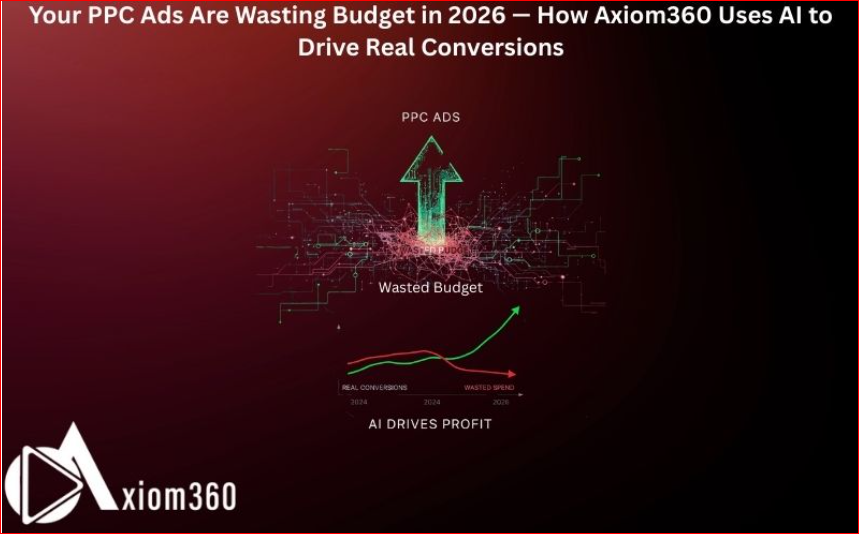
Clicks aren’t customers. In 2026, rising CPCs and privacy shifts mean many ppc campaigns fund platforms, not profits. In my experience, auditing hundreds of accounts, 20–40% of the budget never touches high-intent users. If your ppc agency still measures success by impressions, you’re paying for noise. This article shows what’s broken, what “Pay-per-click” really means now, and how Axiom360 UK uses AI, first‑party data, and revenue feedback loops to turn ppc ads into predictable growth. You’ll get a 30‑day plan, real results, and expert insights you can apply today.
Most ppc waste comes from broad, unqualified traffic, poor query control, and weak conversion tracking. Our AI links ads to CRM revenue, automates negatives and bids in real time, and reallocates spend to high‑intent segments—cutting waste while lifting conversions.
What Is PPC in 2026 and Why Budgets Leak
Pay-per-click’s meaning has shifted. PPC used to be simple: pick keywords, set bids, get clicks. Today, “what is ppc” equals intent management across search, shopping, PMax, and social, all under privacy constraints. Without robust first‑party data, platforms optimize for click‑through rate, not customer value.
Three common leak points:
- Query drift: Broad match captures irrelevant searches without timely negatives.
- Shallow conversions: optimizing to form fills, not qualified leads or revenue.
- Audience gaps: no value-based lookalikes or consent-mode-ready tracking.
Industry data shows CPCs rose across many verticals in 2024, with higher acquisition costs when conversions are poorly defined. If your pay-per-click services don’t connect to profit, the algorithm cannot learn what to find.
The AI Gap: Why Most PPC Agencies Waste Spend
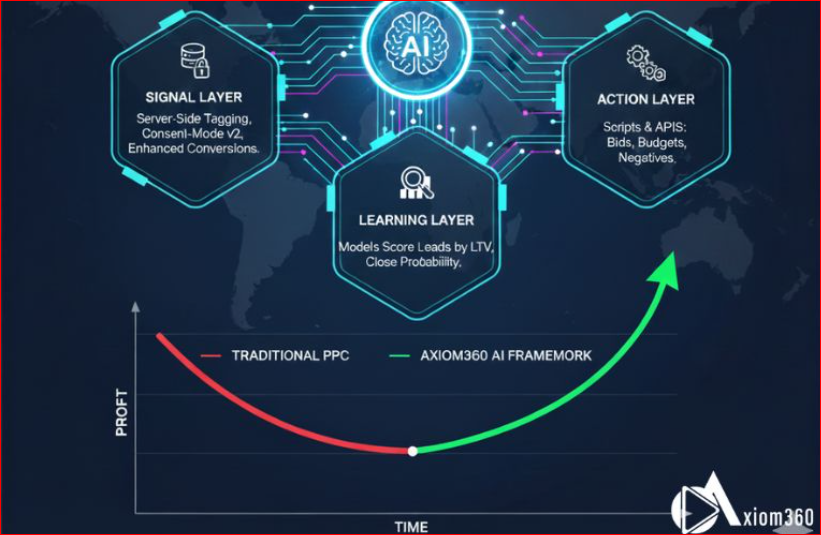
Automation isn’t a strategy. Many ppc marketing agencies turn on Smart Bidding and call it AI. That’s not enough. Without clean data and guardrails, automation amplifies bad inputs and spends faster.
Signs your ppc agency is leaving money on the table:
- Reporting on clicks and impressions, not qualified pipeline and ROAS.
- One-size bidding across products, regions, or lifetime value tiers.
- Manual search term reviews are weeks late, allowing costly drift.
Gartner and McKinsey research show AI lifts outcomes when tied to business goals and first‑party data. A pay-per-click company that cannot instrument consent-mode v2, offline conversion imports, and value rules will plateau. A pay-per-click advertising firm must engineer feedback loops, not just ad copy.
Axiom360’s AI Framework for Pay‑Per‑Click Advertising
We build an AI-first operating system around your account. We combine platform automation with proprietary machine learning and human oversight. Our pay-per-click services focus on revenue, not vanity metrics.
| Traditional PPC Agency | Axiom360 AI Framework |
| Clicks and CPA | Qualified pipeline and revenue |
| Weekly manual negatives | Real-time negative generation from LLMs |
| Uniform bids | Value-based bids by LTV, margin, and region |
| Last-click tracking | Consent-mode, server-side, and offline conversions |
Key components:
- Signal Layer: server-side tagging, enhanced conversions, consent-mode v2 readiness.
- Learning Layer: models score leads by close probability and expected LTV.
- Action Layer: scripts and APIs push bids, budgets, and negatives continuously.
Result: ppc advertising that compounds learnings across channels and seasons.
Data Signals We Use| From Queries to CRM Revenue
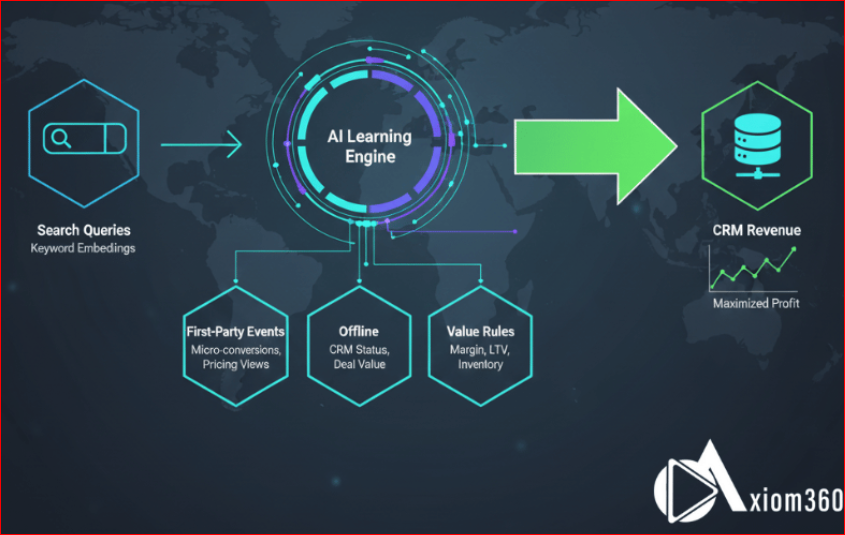
AI needs quality signals. We map the journey from search term to sale and feed it back to PPC ads. That’s where most pay-per-click agencies in the UK struggle.
Our signal stack includes:
- Search term embeddings: cluster intent themes and isolate high-waste pockets fast.
- First‑party events: micro‑conversions like “pricing viewed” weighted by revenue impact.
- Offline conversions: CRM-stamped lead status, deal value, and close date.
- Value rules: boost bids for high-margin SKUs and deprioritize low-inventory SKUs.
We recover modeled conversions in privacy-safe ways with consent mode and server-side tagging. We then train bid and budget allocators to maximize expected profit, not just conversions.
Real Results – Mini Case Studies
Three recent examples from our company:
- B2B SaaS (EMEA): After deploying server-side tracking and offline conversions, cost per qualified demo fell 28%, while pipeline rose 41% in 90 days.
- eCommerce Retailer: Value-based bidding and SKU-level margins increased ROAS 35%, and reduced wasted spend on non-buying queries by 22%.
- Fintech Lead Gen: LLM-driven negatives cut irrelevant clicks by 31%. Sales-accepted leads rose 24% at flat media spend.
In my experience, the biggest unlock was weighting conversions by LTV. Low-cost leads often close at 30–50% lower revenue. We stopped chasing cheap and started buying profitable intent.
Expert Insights
“PPC in 2026 rewards advertisers who control signals, not keywords. If your conversions aren’t truthful, your bids can’t be either.”
Maya Patel, Head of Paid Media
“We use embeddings to cluster search terms by purchase intent. That lets us suppress entire waste clusters within hours, not weeks.”
Liam O’Connor, Data Science Lead
“Automation is a force multiplier only when it learns from revenue. Otherwise, it just accelerates spending.”
Awais Maqsood, Managing Director at Axiom360 UK
Practical Application: Fix Your PPC Ads in 30 Days
Follow this field-tested plan to stop budget bleed and grow real conversions.
Week 1: Instrumentation and Truthful Conversions
- Enable enhanced conversions and consent-mode v2. Use server-side tagging for resilience.
- Define a “qualified” conversion. Push CRM statuses and deal values back via offline conversions.
- Set value rules by margin, region, and inventory.
Week 2: Query Control and Creative Alignment
- Cluster search terms into intent groups. Auto-generate negatives for low-intent clusters.
- Rewrite RSAs to mirror high-intent language and objections. Test USP-led assets.
- Align landing pages to queries. Speed, trust badges, and above-the-fold proof.
Week 3: Bidding and Budget Reallocation
- Switch to value-based bidding with tROAS targets tied to LTV bands.
- Shift 15–25% of the budget from discovery to proven intent clusters.
- Apply dayparting and geo modifiers based on lead quality windows.
Week 4: Profit Checks and Scale
- Run cohort analysis: CAC payback, contribution margin, and refund rates.
- Scale budgets only on cohorts that hit target payback.
- Automate alerts for drift: sudden CPC spikes, conversion mix changes, or query creep.
Common mistakes to avoid:
- Optimizing for cheap form fills without sales acceptance.
- Ignoring modeled conversions when consent reduces observable data.
- Letting PMax cannibalize branded and high-LTV segments unchecked.
Final Thoughts
The ppc ads landscape in 2026 rewards advertisers who connect ads to truth. If clicks don’t equal customers, your budget funds the wrong outcomes. Our experts align AI, first‑party data, and revenue feedback loops to turn pay-per-click into compounding growth. Ready to cut waste and scale real conversions? Book a free PPC audit today.
FAQ
What is PPC, and how does it work today?
PPC, or pay-per-click, means you pay when someone clicks your ad. In 2026, it spans search, shopping, and PMax. Success depends on first‑party data, consent-friendly tracking, and optimization to qualified conversions and revenue—not just clicks.
How does an AI-driven ppc agency reduce wasted spend?
AI clusters search terms, scores leads by close probability, and automates negatives and bids. By feeding CRM revenue into ads, it reallocates budget toward high-intent users and away from low-quality clicks, reducing waste while improving ROAS.
Do I need enhanced conversions and consent-mode v2?
Yes, especially in the UK and EU. Consent-mode v2 and enhanced conversions recover modeled conversions while respecting privacy. They restore the signals Smart Bidding needs to find profitable users and stabilize performance.
What’s the difference between pay-per-click services and a pay-per-click advertising firm?
Services often mean execution: building campaigns and ads. A firm should deliver strategy, data engineering, revenue attribution, and continuous optimization. In 2026, the difference is whether they optimize for profit, not platform metrics.
Can Axiom360 help a ppc agency London account already using Smart Bidding?
Yes. We layer value rules, offline conversions, LTV-based targets, and AI-driven query control on top of Smart Bidding. Most accounts see reduced CPA on qualified leads and higher ROAS within 30–60 days.
Is “pay per click campaign” auditing part of your service?
Yes—typos and all. Our audits cover tracking, queries, creative, bidding, and landing pages. We identify waste clusters, instrumentation gaps, and opportunities for value-based optimization across your campaigns.