Search results don’t look the way they did three years ago. Google’s AI Overviews sit above the fold, ChatGPT and Perplexity answer questions before a user ever opens a browser tab, and “ranking #1” no longer guarantees a click. That shift is why a new discipline has moved from marketing jargon into an actual job function: content engineering.
If you’ve seen the term floating around LinkedIn or job boards and aren’t quite sure whether it’s a rebrand of content marketing or something genuinely different, this guide walks through the content engineering meaning, how it differs from content strategy, the skills it demands, and how AI fits into the process without replacing the human judgment that still decides whether content actually works.
What Is Content Engineering?
So, what is content engineering, exactly? At its core, content engineering is the practice of designing, structuring, and producing content as a repeatable, data-informed system rather than a series of one-off articles. It borrows the mindset of software engineering — modular components, testable processes, version control, measurable outputs — and applies it to how content gets planned, written, formatted, and distributed.
The content engineering definition that’s gaining consensus among practitioners looks something like this: the systematic application of data, structure, and technology to content production, so that each piece is built to perform across search engines, AI answer engines, and human readers at the same time.
That’s a meaningful departure from the “write a blog post and hope it ranks” approach that dominated SEO for a decade. Content engineering treats structure — headings, schema, internal linking, entity relationships — as seriously as it treats the prose itself. A well-engineered piece of content isn’t just well-written; it’s built so a crawler, an AI model, and a human reader can all parse it correctly on the first pass.
This matters more now than it used to because the “reader” of a piece of content is no longer only a human scanning a page. It might be a large language model summarizing the page into an AI Overview, a voice assistant reading a snippet aloud, or a crawler deciding whether the page deserves to be indexed at all. Content that’s engineered with that reality in mind tends to hold up across all three audiences; content that’s written purely for a human skimmer often doesn’t translate cleanly into the other formats.
Content Engineering vs Content Strategy: What’s the Difference?
This is one of the most searched comparisons in the space, and for good reason — the two disciplines overlap but answer different questions.
- Content strategy asks: what should we say, to whom, and why? It covers audience research, messaging pillars, editorial calendars, and business goals. It’s the “what” and the “why.”
- Content engineering asks: how do we build it so it performs, scales, and stays structurally sound? It covers information architecture, schema markup, templated content models, AI-assisted drafting workflows, and technical SEO hygiene baked directly into the content itself. It’s the “how.”
Put simply: content strategy vs content engineering isn’t an either/or debate. Strategy sets direction; engineering builds the machinery that executes that direction at scale and keeps it structurally optimized as algorithms change. Teams that only do strategy tend to produce content that reads well but underperforms technically — good ideas that never get indexed properly, or long-form pieces with no internal linking to spread authority around a site. Teams that only do engineering can produce content that’s technically flawless but generic, hitting every structural checkbox without saying anything a reader couldn’t get from ten other pages.
The strongest content operations run both functions in tandem rather than treating them as separate departments. A strategist decides a business needs a pillar page on a given topic; a content engineer decides how that pillar page should be structured, which subtopics it should link out to, what schema it needs, and how it should be updated as search behavior shifts. Neither function replaces the other — they’re sequential steps in the same pipeline.
AI Content Engineering: Where Automation Actually Helps

AI content engineering is the fastest-growing branch of the discipline, and it’s also the most misunderstood. The goal isn’t to let a model write an article end to end and publish it unedited — that approach tends to produce generic, easily flagged filler that both search engines’ helpful content systems and human readers can spot quickly.
Instead, AI content engineering uses large language models and automation at specific points in the pipeline:
- Research and gap analysis — surfacing what competitors cover, what questions users are actually asking, and where existing content falls short.
- Structural drafting — generating outlines, heading hierarchies, and schema-ready FAQ blocks based on search intent data.
- Entity and semantic mapping — identifying related topics and terms a piece should cover to be considered comprehensive by both search engines and AI answer engines.
- Repurposing and scaling — turning one well-researched piece into multiple formats (social posts, email, video scripts) without starting from zero each time.
- Quality control at scale — flagging inconsistent terminology, broken internal links, or outdated statistics across large content libraries faster than a manual audit would.
The editorial judgment — is this accurate, does it reflect real experience, would a human reader trust it — still sits with a person. That’s not a nostalgic preference; it’s a practical one, since AI-generated claims still need fact-checking and a point of view that a model can’t originate on its own. Content that reads as purely synthetic, with no original data, opinion, or firsthand detail, tends to underperform even when it’s technically well-structured, because it doesn’t give search engines or readers any reason to trust it over the dozens of similar pages already online.
How to Use AI for Content Engineering: A Practical Workflow
If you’re wondering how to use AI for content engineering without ending up with the kind of generic content search engines are actively deprioritizing, a working sequence looks like this:
- Start with real search data. Pull actual queries, “People Also Ask” questions, and AI Overview citations for your target topic before writing anything. Guessing at intent is the single biggest cause of content that never ranks.
- Build a content brief, not a prompt. Feed the AI tool structured inputs — target keyword, search intent, competitor gaps, required entities — rather than a vague one-line prompt. The quality of the brief determines the quality of the draft far more than the model does.
- Draft in sections, not in one pass. Generate an outline first, review it, then draft section by section so a human can catch structural or factual issues early rather than after 2,000 words are already written.
- Layer in original input. Add a data point, a case study, a screenshot, or a firsthand observation the AI couldn’t have generated. This is what search engines increasingly weigh under E-E-A-T (Experience, Expertise, Authoritativeness, Trustworthiness) — genuine signals of experience are hard to fake and easy to spot when they’re missing.
- Structure for AEO. Add direct-answer paragraphs near the top of key sections, use FAQ schema, and keep sentence structures clear enough that an AI answer engine can lift them cleanly without losing meaning.
- Edit for voice and accuracy last. A human pass should be the final gate before publishing, not an afterthought. This is also the point at which internal links, calls to action, and brand-specific context typically get added.
A structured, human-guided workflow outperforms both manual and fully automated content in scalability and ranking quality.
Top Content Engineering Tools for SEO
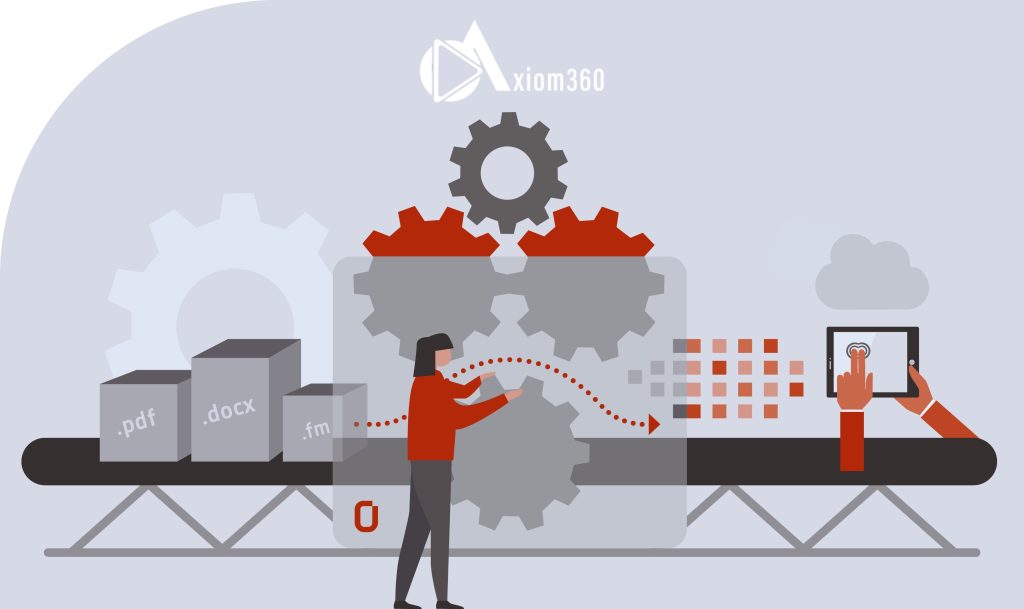
There’s no single tool that “does” content engineering — it’s a stack. Some categories worth knowing:
- Search intent and SERP analysis tools, such as Ahrefs or Semrush, for identifying content gaps and tracking how AI Overviews cite existing pages.
- AI drafting and research assistants, including large language models like Claude and ChatGPT, used for outlining, summarizing research, and generating structural drafts.
- Schema and structured data generators, built around the vocabulary at Schema.org, to mark up FAQs, how-to steps, and article metadata so search engines and AI crawlers can parse content more reliably.
- Content brief and workflow platforms that keep research, drafts, and edits versioned, similar to how a codebase is managed in software development.
- Internal linking and topic-cluster tools that map how pieces of content relate to each other, reinforcing topical authority across a site.
The right combination of top content engineering tools for SEO depends on team size and budget more than any single “best” pick. A solo writer’s stack might be a keyword tool, an AI drafting assistant, and a spreadsheet. An agency stack managing dozens of client sites typically layers in dedicated brief software, automated schema generation, and content performance dashboards on top of that.
The Content Engineering Skill Set
Because it sits between marketing, SEO, and light technical work, the content engineering skill set is broader than traditional copywriting. It typically includes:
- Solid SEO fundamentals — keyword research, on-page optimization, internal linking logic
- Working knowledge of schema markup and basic HTML structure
- Comfort prompting and evaluating AI tools without over-relying on raw output
- Data literacy — reading search console data, SERP features, and content performance metrics
- Strong editorial judgment to catch inaccurate or generic AI output before it publishes
- Understanding of E-E-A-T signals and how to build genuine experience and expertise into content
Writers and marketers who pick up these skills tend to be more resilient as search evolves, since the discipline isn’t tied to any one algorithm update — it’s tied to the underlying idea that structured, well-sourced, technically sound content performs regardless of which engine is reading it. That resilience is becoming a real hiring differentiator; job postings that would have said “SEO copywriter” two years ago increasingly describe a hybrid role that expects at least a working grasp of schema, AI tooling, and performance data alongside the writing itself.
Content Engineering Services: What to Look For
For businesses considering outsourcing this function, content engineering services generally fall into a few tiers: full-funnel agencies that handle strategy, production, and technical implementation together; freelance specialists who focus narrowly on schema and technical content audits; and hybrid teams that pair AI-assisted production with human editorial oversight.
When evaluating a provider, it’s worth asking a few direct questions: How do they balance AI-assisted speed with human review? Can they show examples of content that’s been structured for both traditional search and AI answer engines? How do they measure success beyond rankings alone — visibility in AI Overviews, click-through rate, and time-on-page all matter now, not just position on a results page. A provider that can only point to ranking reports, without any sense of how content performs in AI-driven search, is likely still working from an older playbook.
Agencies like Axiom360 approach this by treating content engineering as one part of a broader SEO and AEO system rather than a standalone deliverable — pairing it with technical audits and structured data work so the content isn’t performing in isolation from the rest of a site’s search visibility.
Frequently Asked Questions
What is content engineering?
Content engineering is the systematic, data-driven approach to planning, structuring, and producing content so it performs well across search engines, AI answer engines, and human readers — combining editorial craft with technical structure like schema and internal linking.
What is the content engineering meaning in simple terms?
In plain terms, it means treating content production like a system with repeatable steps, structure, and measurable outputs, rather than writing individual articles with no shared process behind them.
Content engineering vs content strategy — which do I need first?
Strategy comes first, since it defines audience, goals, and messaging. Engineering follows to build the structural and technical framework that makes that strategy perform in search and AI results.
How to use AI for content engineering effectively?
Use AI for research, outlining, and structural drafting, but keep human editors responsible for accuracy, original insight, and final review — this keeps content aligned with E-E-A-T expectations rather than reading as generic.
What skills does content engineering require?
A mix of SEO fundamentals, basic schema and HTML knowledge, AI tool literacy, data analysis, and strong editorial judgment.
Are content engineering services worth it for small businesses?
For SMEs without in-house technical SEO or editorial capacity, outsourcing to a specialist team can be more cost-effective than hiring separate strategy, writing, and technical SEO specialists individually — provided the provider can show a real process rather than just AI output with a light edit.
Disclaimer
Content engineering isn’t replacing content strategy, copywriting, or SEO — it’s the connective layer that makes all three work together in a search landscape where AI answer engines are now a primary distribution channel. Whether a team builds this capability in-house or partners with an agency that already runs the process, the underlying principle stays the same: content built on structure, real expertise, and rigorous editorial review holds up better than content built on volume alone.
About The Author
Sana Usman is an SEO specialist and content strategist with a strong focus on content engineering, AI-driven SEO, and scalable organic growth. With hands-on experience in keyword research, technical SEO, and performance optimization, she helps brands build structured, high-performing content that ranks across search engines and AI platforms.
Sana specializes in bridging the gap between data, AI tools, and human-centered content — ensuring every piece is not only optimized for visibility but also delivers real value to users. She actively shares insights on modern SEO trends, content systems, and search evolution.
Connect with her on LinkedIn: https://www.linkedin.com/in/sana-usman-aa3ab3243