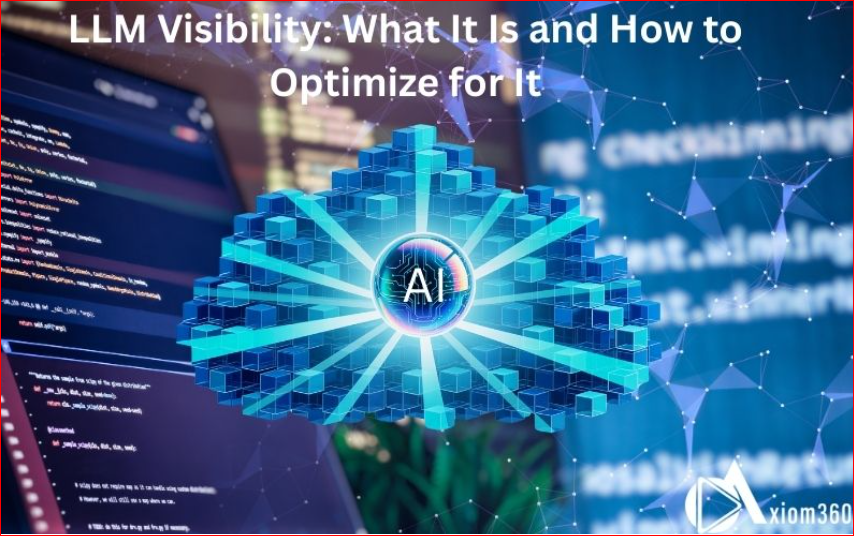
In the fast-evolving digital world, businesses are continually looking for ways to stand out online. Whether you’re a startup or a designated brand, LLM visibility plays a significant role in guaranteeing our content reaches the right audience at the right time. But what exactly does it mean, and how can you optimize it for better performance? In this post, Axiom360 explains the concept and shares effective strategies for improving Large language models, especially for businesses like yours.
What is LLM Visibility?
LLM stands for “Large Language Model,” a type of AI used in search engines and digital tools to understand, process, and generate human-like content. It refers to how easily these AI models can identify and rank your content. In simpler terms, it’s the measure of how well your content is understood and ranked by AI-driven search algorithms like Google’s BERT and GPT models.
With the rise of AI in search, having your content optimized for Large Language models is crucial. It ensures that your website content not only ranks well but also answers user queries in a way that resonates with the AI algorithms, increasing your odds of appearing in the top search results.
Why Large Language Model Visibility Matters
1. AI-Driven Search Results
Search engines now use Large Language Models to interpret queries, understand context, and provide more accurate results. This means that having visibility in AI ensures your content is recognized and ranked by these models, improving your chances of showing up in relevant search queries.
2. Enhancing User Experience
Optimizing for Large Language doesn’t just benefit search engines. It improves your content’s readability and relevance, which can lead to a better user experience. This, in turn, helps boost engagement, reduce bounce rates, and ultimately increase conversions.
3. Stay Ahead of Competitors
As AI technology becomes more advanced, optimizing for its visibility helps future-proof your website content. Staying ahead of the curve by aligning your content with these algorithms will give you a competitive edge over businesses that aren’t optimizing for LLMs.
How to Optimize for Large Language Models’ Visibility

Optimizing for a large language model is about more than just adding keywords to your content. It involves a combination of SEO strategies that help your website become more AI-friendly. Here’s how you can optimize your content:
1. Focus on Content Relevance and Quality
AI models prioritize high-quality, relevant content. It’s no longer enough to stuff your content with keywords; your content should answer users’ questions in a natural, comprehensive, and engaging way. When writing, make sure your content is informative, addresses user intent, and provides clear value.
2. Structure Content for Easy Understanding
LLMs rely on structured data to understand your content. Use clear headings (H1, H2, H3), bullet points, and short paragraphs to help break down complex information. Also, include schema markup to help search engines understand the context of your content. This not only helps with these models’ visibility but also boosts your possibilities of appearing in rich snippets.
3. Optimize for Voice Search and AI Queries
With the rise of voice search and AI-driven assistants, your content should be optimized to match conversational queries. LLMs are particularly adept at interpreting natural language, so make sure your content answers questions directly. Think about the kinds of queries your target audience might ask and tailor your content accordingly.
4. Leverage User-Generated Content
User-generated content, such as reviews and testimonials, can enhance visibility because it offers fresh, authentic perspectives. LLMs tend to rank content higher when it includes social proof or diverse opinions, as this increases trustworthiness and relevance.
5. Track and Adjust Your Large Language Model Visibility
Always track how your content is performing and adjust it based on data insights. LLM Visibility tracking tools allow you to monitor how well your content is being understood and ranked by AI models. Use this data to make informed changes to your SEO strategy and improve your content’s overall performance.
6. Localize Your Content for Geo-Targeting
If you’re targeting a specific location, ensure your content is optimized for geo-targeting. Use local keywords and phrases that are relevant to your audience in specific regions. For example, for businesses like Axiom360 UK, it’s essential to incorporate location-specific terms (e.g., “Axiom360 digital marketing agency”) to improve local search rankings.
Best Practices for LLM Visibility Optimization
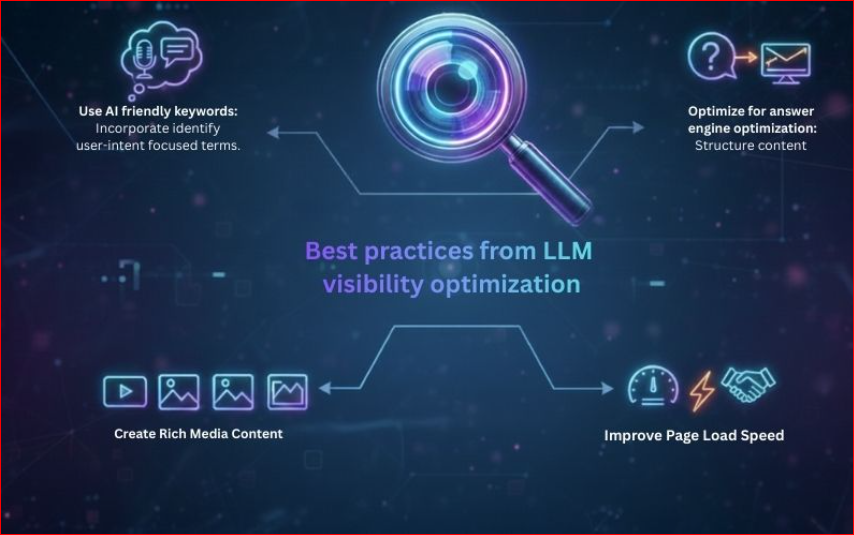
- Use AI-Friendly Keywords: Identify the keywords your audience uses and incorporate them naturally into your content. Avoid overstuffing and focus on creating meaningful, engaging content.
- Create Rich Media Content: Videos, images, and infographics can improve user engagement and, in turn, enhance your presence.
- Optimize for Answer Engine Optimization (AEO): Structure your content so it answers common questions directly. AEO practices help you show up in featured snippets and answer boxes.
- Improve Page Load Speed: Fast-loading websites improve user experience, which is essential for AI presence and overall SEO performance.
- Focus on Expertise, Authority, and Trustworthiness (EEAT): Ensure your content showcases your industry knowledge and builds trust with your audience.
Tracking and Analyzing your AI Prominence
Use tools like Google Analytics and Ahrefs to track how your pages are performing and to ensure that your content is optimized for AI prominence. Monitor your rankings, traffic, and user engagement to understand how well AI models are recognizing and ranking your content. Based on this data, make continuous improvements to your content strategy.
The Verdict
Optimizing for Large language models is no longer a luxury; it’s a necessity. As AI continues to play a major role in how search engines rank content, ensuring your website is optimized for AI will help you stay ahead of the curve. By focusing on quality content, proper structure, and continuous optimization, businesses like Axiom360 UK can improve their rankings and visibility online.
Want to improve your LLM visibility and drive more targeted traffic? Contact Axiom360, the leading digital marketing agency in the UK, to start your SEO journey today!
FAQs:
What is LLM visibility?
It refers to how well AI models, like Google’s BERT and GPT, can recognize and rank your content. It ensures that your content is understood and ranked by AI algorithms for better search performance.
Why is AI visibility important for SEO?
Optimizing for Large Language Model improves your chances of ranking higher in search results. It helps AI-driven search engines better understand and respond to user queries, enhancing the user experience and increasing conversions.
How do I optimize my content for AI?
To optimize for AI, focus on high-quality, relevant content, use structured data, optimize for voice search, and leverage user-generated content. Also, track and adjust your SEO strategy based on performance.
How can I track my LLM visibility?
You can track your presence using SEO tools like Google Analytics, Ahrefs, and specific LLM visibility trackers to monitor how AI models rank and understand your content.
What role does voice search play in LLM visibility?
Voice search optimization is crucial for AI prominence. AI models excel at interpreting natural language, so tailoring your content to answer conversational queries will improve your rankings.
How can I improve local SEO with LLM visibility?
Local SEO can be enhanced by incorporating geo-targeted keywords specific to your audience’s region. This helps AI models rank your content for location-based searches.
About the Author
Sana Riaz is a seasoned SEO content strategist with over five years of experience in writing for the SaaS industry and creating technical content that resonates with both search engines and readers. Her expertise spans various aspects of SEO, including AEO, GEO, schema optimization, and the integration of AI in content strategies. Sana specializes in developing high-quality, AI-ready content that is not only optimized for search engines but also crafted to meet the demands of the evolving digital landscape. When she’s not diving into SEO trends, you can find her exploring new AI tools and strategies to stay ahead in the competitive world of digital marketing.
Feel free to connect with Sana on LinkedIn for more insights into SEO, content strategy, and AI-driven marketing trends.