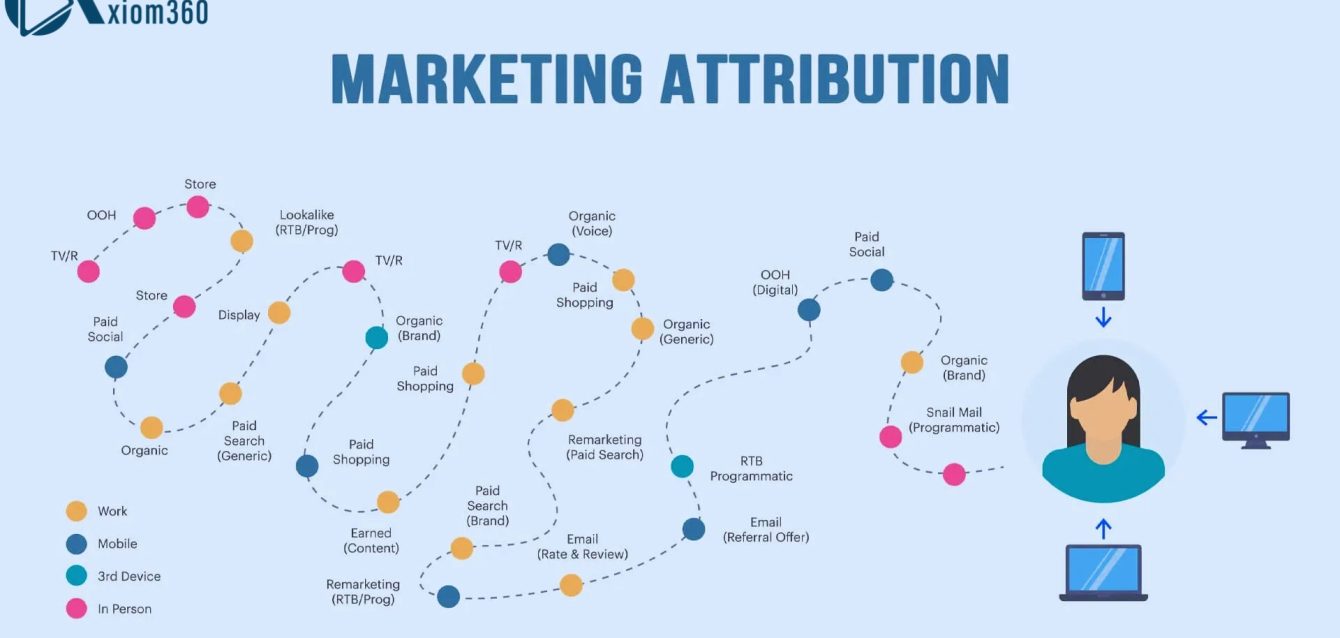
Most marketing attribution advice is written for companies with dedicated RevOps teams, tens of thousands of tracked conversions a year, and budget for a dedicated attribution platform. Algorithmic, machine-learning-driven attribution genuinely needs that kind of scale to work — without enough data volume, a model built to find statistical patterns simply doesn’t have enough signal to find them reliably.
Most B2B SaaS companies aren’t operating at that scale, and don’t need to be, to move meaningfully beyond last-click. The useful goal for a smaller team isn’t building a sophisticated model — it’s building enough visibility to stop making obviously wrong decisions, like cutting a channel that’s actually driving early-stage pipeline just because it rarely shows up as the final touch before a deal closes.
Why Last-Click Keeps Misleading Smaller Teams Specifically
Last-click attribution gives every conversion’s credit to whatever touchpoint happened right before the form fill or signup, ignoring everything that came before it. For a B2B SaaS buying journey that unfolds over weeks or months and involves several people, this systematically undercredits the channels that build early awareness — organic content, early-stage ads, word of mouth — and overcredits whatever touchpoint happens to sit closest to the conversion, often branded search or direct traffic that only exists because an earlier channel already did the real work of creating interest.
A Gotcha That Catches Even Teams Who Think They’ve Already Fixed This
Changing an attribution model setting doesn’t always change what a team is actually looking at day to day. Google’s own documentation on attribution settings is specific about this: the reporting attribution model setting in GA4 only applies to certain dimensions, and the default traffic and user acquisition reports most teams check first still use session source and first user source — dimensions that behave like last-click and first-click, respectively, regardless of what the property’s attribution model is set to. A team can switch their attribution model to data-driven and still be making decisions off reports that never stopped using last-click under the hood.
What’s Realistic Without an Enterprise Data Stack
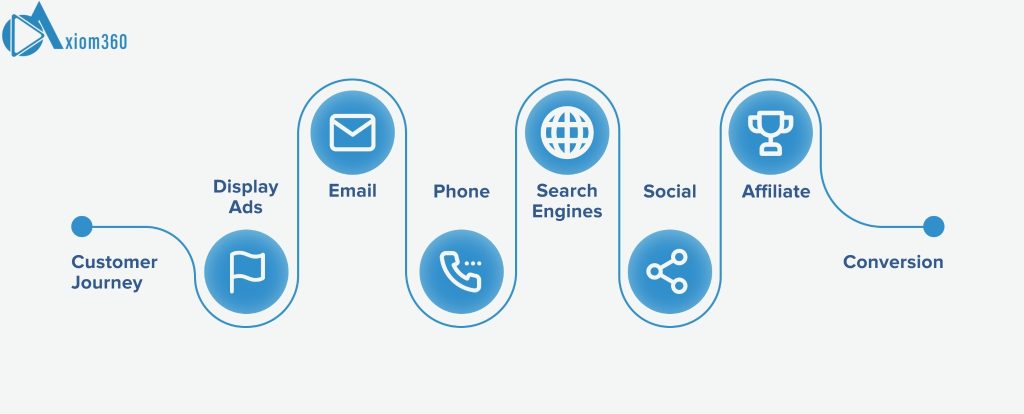
A few approaches produce real improvement over last-click without requiring the data volume that sophisticated algorithmic models need:
- Rule-based multi-touch models (linear, U-shaped, or position-based) — these distribute credit using a fixed, understandable rule rather than a statistical model, and work with far less data than a true data-driven model requires
- A simple first-touch and last-touch comparison, viewed side by side rather than relying on either alone — even this basic comparison reveals channels that last-click alone hides entirely
- Sales team input as a data source, not just a backup — reps often know which content or interaction actually came up in conversations, filling gaps that tracking alone misses, especially for anything that happened offline
- A lightweight holdout or pause test — temporarily reducing spend on one channel and watching what happens to pipeline is a rougher version of incrementality testing, but it doesn’t require the modeling infrastructure a formal version does
Matching the Model to the Company, Not the Ambition
| Company profile | Realistic attribution approach |
| Small team, limited tracked conversions | First-touch/last-touch comparison, sales team input |
| Growing team, moderate conversion volume | Rule-based multi-touch model (linear, U-shaped, or position-based) |
| Established team, high conversion volume, dedicated RevOps | Data-driven or algorithmic multi-touch attribution, incrementality testing |
Trying to run a model built for the bottom row of this table with the data volume of the top row tends to produce results that look precise but aren’t actually reliable — the model finds a pattern in the data because it’s built to, not because the pattern is genuinely there at that sample size. One industry analysis of B2B attribution trends noted that last-touch still remains the most common model in practice, despite its known limitations — a sign that many teams are aware of the problem but reasonably hesitant to adopt more complex approaches without the resources to support them properly.
Connecting attribution back to the funnel itself
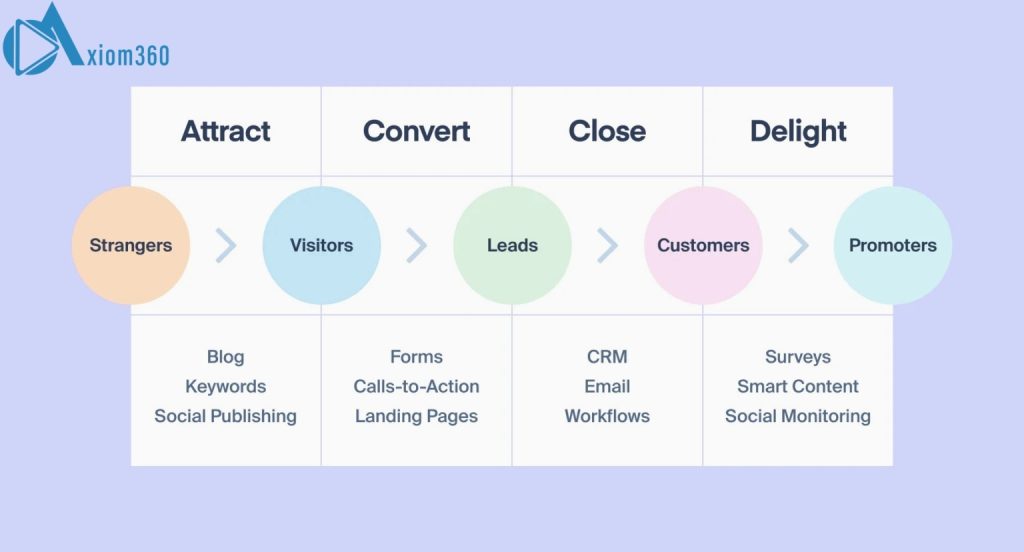
Attribution answers which channels contributed to a conversion. It doesn’t explain what happened at each stage of the funnel that led there, which is a separate diagnostic question. Pairing attribution data with funnel-level conversion analysis gives a more complete picture than either alone — attribution shows where credit should go, funnel analysis shows where people are actually getting stuck along the way.
Getting sales and marketing to agree on what’s being measured first
Attribution data is only as useful as the shared definitions behind it. If marketing counts a “qualified lead” differently than sales counts an “opportunity,” attribution reporting ends up measuring two different funnels that happen to share the same dashboard. Getting marketing and sales aligned on funnel stage definitions before investing further in attribution tooling tends to matter more than which specific model gets chosen.
Where attribution connects to conversion strategy
Attribution and conversion optimization are really two views of the same funnel — attribution asks which channels deserve credit, while conversion strategy asks how well each stage of that funnel is performing once someone arrives. Neither one substitutes for the other, and treating them as connected rather than separate initiatives tends to produce more useful decisions than optimizing either in isolation.
FAQs
Do small B2B SaaS companies need multi-touch attribution?
Not necessarily a sophisticated version. A simpler rule-based model or even a basic first-touch/last-touch comparison already improves meaningfully on last-click alone, without requiring enterprise-level data volume.
How much data is needed for data-driven attribution to work reliably?
More than most smaller SaaS companies generate. Algorithmic models need a substantial volume of tracked conversions to find genuinely reliable patterns rather than statistical noise that looks like a pattern.
Why does changing the GA4 attribution model setting sometimes seem to have no effect?
Because many of the default reports most teams check use dimensions that aren’t affected by the attribution model setting at all, and continue behaving like last-click or first-click regardless of what the property setting says.
What’s a reasonable first step for a company still using last-click?
Comparing first-touch and last-touch reporting side by side is a low-effort starting point that already reveals channels last-click alone hides, without requiring new tooling.
Should attribution data be trusted on its own, without other input?
No. Sales team input and funnel-level conversion analysis both fill gaps that attribution tracking alone tends to miss, particularly for offline interactions and multi-stakeholder deals.