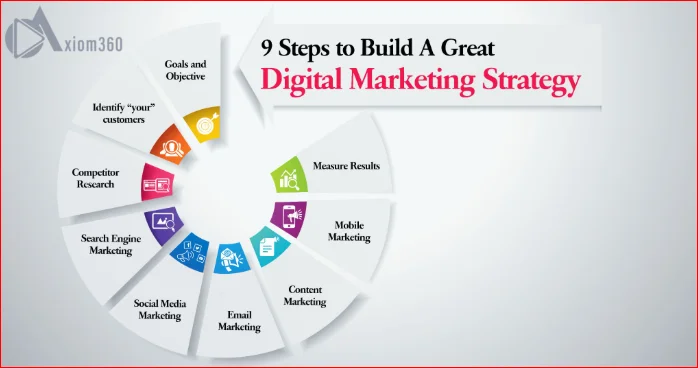
Most businesses don’t struggle with marketing because they lack ideas. They struggle because they never wrote a strategy down in the first place. They ran a few ads, posted on social media when someone remembered to, and hoped it would add up to something. Sometimes it does. Usually it doesn’t.
A marketing strategy fixes that. It’s not a mood board or a list of platforms you plan to “be active on.” It’s a document that tells you exactly who you’re trying to reach, what you’re offering them, and how every campaign, post, or email fits into a bigger plan. Get it right and your team stops guessing. Get it wrong, or skip it altogether, and you end up spending money without knowing why some months work and others don’t.
This guide walks through how to build a marketing strategy from scratch, in a sequence that actually holds up once you start executing.
What a Marketing Strategy Actually Is (And Isn’t)
People use “marketing strategy” and “marketing plan” interchangeably, but they’re not the same thing. The strategy is the why and who: your positioning, your audience, your value proposition. The plan is the how: the campaigns, the content calendar, the ad spend. You need the strategy first. Without it, a plan is just a list of activities with no direction behind them.
A solid strategy usually answers four questions:
- Who are we actually trying to reach?
- Why should they choose us over anyone else?
- Which channels make sense for getting in front of them?
- How will we know if it’s working?
If you can’t answer those in a sentence or two each, that’s the gap this guide is going to close.
Step 1: Do the Research Before You Do Anything Else
Skipping research is the single most common reason marketing strategies fail before they even launch. You end up building a plan around assumptions instead of facts, and assumptions are expensive when they’re wrong.
Start with three things:
Your audience. Talk to existing customers if you have them. Ask what almost stopped them from buying, and what finally convinced them. If you don’t have customers yet, look at where your target audience already spends time online — forums, LinkedIn groups, review sites for competitors — and read what they’re complaining about.
Your competitors. Look at three to five direct competitors and note what they promise, how they price, and where their content or reviews are weak. You’re not copying them; you’re finding the gap they’ve left open.
Your market. Industry reports, Google Trends, and basic search volume data will tell you whether demand for what you’re offering is growing, flat, or shrinking. This shapes how aggressive your goals should be.
In practice, this is where most strategy work should start — a plan built without real audience and competitor data tends to fall apart within a quarter.
Step 2: Set Goals That Are Actually Measurable
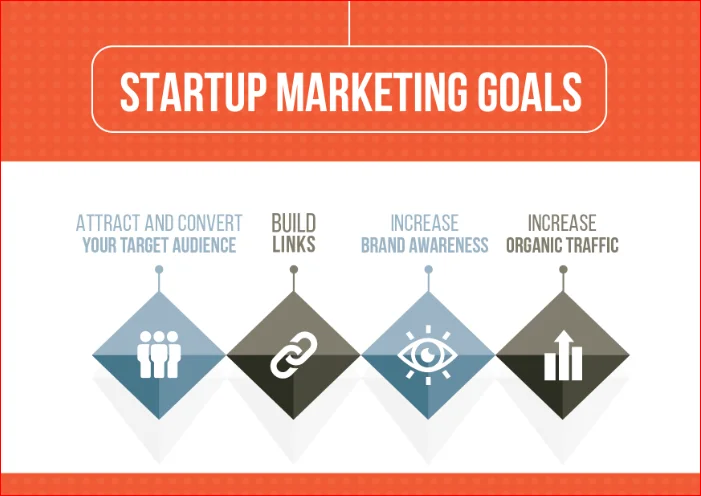
“Grow the business” is not a goal. It’s a wish. A usable marketing goal follows the SMART format: specific, measurable, achievable, relevant, and time-bound.
Instead of “increase brand awareness,” try “grow organic website traffic by 25% in six months through content and technical SEO.” Instead of “get more leads,” try “generate 40 qualified leads per month from paid and organic channels by Q3.”
Every goal should tie back to something the business actually needs — revenue, retention, market share — not just a vanity metric that looks good in a slide deck. This is also the point where you decide what you’re not going to chase. Trying to hit five different objectives with one campaign usually means you hit none of them well.
A strategy with three sharp, measurable goals almost always outperforms one with ten vague ones.
Step 3: Build Real Audience Personas, Not Guesses
Once you know your goals, get specific about who you’re marketing to. A persona isn’t just “women, 25–34, interested in fitness.” That’s a demographic, not a person.
A useful persona includes:
- What problem they’re actively trying to solve
- What they’ve already tried that didn’t work
- Where they go to research solutions (search engines, social platforms, peer recommendations)
- What would make them trust a new brand enough to buy
If you’re a B2B company, this also means mapping out who’s involved in the buying decision — the person who finds you often isn’t the person who signs off on the budget. Ignoring that split is a common reason B2B campaigns generate interest but not actual sales.
This buying-committee detail is usually what separates content marketing that gets read from content that actually moves a deal forward.
Step 4: Nail Down Your Positioning and Value Proposition
This is the step people rush, and it shows later in every piece of content and every ad that doesn’t quite land.
Your value proposition should answer one question clearly: why you, and not the five other options your audience is comparing you against? It’s not a slogan. It’s the honest reason someone should pick you. As Harvard Business Review has noted, positioning built around a genuine point of difference consistently outperforms positioning built around a broader category claim.
A good way to test it: turn every feature into a benefit. “Our software has drag-and-drop reporting” is a feature. “Build client reports in minutes instead of hours” is a benefit. If your messaging reads like a spec sheet, it needs another pass.
This is also where brand consistency starts to matter. Whatever positioning you land on needs to show up the same way across your website, your ads, your emails, and your social presence — not a slightly different pitch on every channel.
Step 5: Choose the Right Channels (Not All of Them)
Once you know who you’re targeting and what you’re saying to them, you can pick channels with some confidence instead of copying whatever competitors are doing.
A few honest questions to ask before committing to a channel:
- Is my actual audience present there, or am I hoping they will be?
- Do I have the resources to maintain this channel consistently, not just launch it once?
- Does this channel match the buying stage my audience is usually in — early research, comparison, or ready to buy?
For most SMEs, this usually narrows down to two or three core channels done well, rather than five done half-heartedly. SEO tends to be the compounding channel — the work you do this quarter still brings traffic a year later — which is why search visibility is often the foundation before layering in paid or social. According to HubSpot’s State of Marketing research, websites, blogs, and SEO remain among the most popular and impactful channels for B2B companies in 2026.
Step 6: Set a Realistic Budget
Marketing budgets vary a lot by industry and business stage, but a common benchmark is somewhere around 8–10% of revenue for established businesses, with early-stage companies often needing to spend more to build initial visibility.
Once you have a number, split it with intention:
- The bulk goes to the channel most likely to hit your Step 2 goals
- A smaller portion supports secondary channels
- Keep 10–15% aside to test something newer — a channel, a format, an audience segment — without betting the whole budget on it
Track spend against results monthly, not just at year-end. It’s far cheaper to redirect budget in month two than to discover in month eleven that half your spend went nowhere.
Step 7: Turn the Strategy Into an Actual Plan
Strategy without execution is just a document nobody looks at again. Translate it into a working plan with:
- A content or campaign calendar with real dates, not “sometime this quarter”
- Clear ownership — who’s writing, who’s designing, who’s approving
- Milestones tied to your Step 2 goals, so you can check progress before the final deadline
This is also where a lot of good strategies quietly die — not because the thinking was wrong, but because nobody assigned a deadline or an owner. If a task doesn’t have both, it usually doesn’t happen.
Step 8: Track Results and Adjust
A marketing strategy isn’t something you write once and file away. It’s a working document that should get reviewed regularly — monthly for fast-moving channels like paid ads, quarterly for slower ones like SEO and content.
Track metrics that actually connect to your goals: organic traffic and rankings if visibility was the target, conversion rate and cost per lead if pipeline was the target, retention and repeat purchase rate if it was about existing customers. Vanity metrics like follower counts or impressions are fine to watch, but they shouldn’t be what you report to leadership as proof of success.
When something isn’t working, the instinct is often to add more — more channels, more content, more spend. Usually the better move is to look at what is working and do more of that instead. This is where sustained KPI tracking pays off: refining what’s already producing results rather than launching a new tactic every month.
Common Mistakes That Derail a Marketing Strategy
A few patterns show up again and again in strategies that don’t perform:
- Skipping research and going straight to tactics. Picking channels before understanding the audience almost always means wasted spend.
- Chasing every channel at once. Being mediocre on five platforms rarely beats being genuinely good on two.
- No clear owner for execution. A strategy with no accountability structure stays a strategy forever, never a plan.
- Never revisiting it. Markets shift, competitors change tactics, and a strategy from eighteen months ago may no longer reflect reality. The Content Marketing Institute has noted that organizations that document and regularly review their strategy consistently report stronger results than those that don’t.
Bringing It All Together
A marketing strategy doesn’t need to be complicated to work. It needs research behind it, a clear audience, honest positioning, the right channels for your specific business, and a habit of checking whether it’s actually delivering. Most businesses that struggle with marketing aren’t missing creativity — they’re missing this structure.
About the Author
Sana Riaz is a seasoned SEO content strategist with over five years of experience in writing for the SaaS industry and creating technical content that resonates with both search engines and readers. Her expertise spans various aspects of SEO, including AEO, GEO, schema optimization, and the integration of AI in content strategies. Sana specializes in developing high-quality, AI-ready content that is not only optimized for search engines but also crafted to meet the demands of the evolving digital landscape. When she’s not diving into SEO trends, you can find her exploring new AI tools and strategies to stay ahead in the competitive world of digital marketing.
Feel free to connect with Sana on LinkedIn for more insights into SEO, content strategy, and AI-driven marketing trends.
Frequently Asked Questions
What’s the difference between a marketing strategy and a marketing plan?
A marketing strategy defines the why and who — your positioning, audience, and goals. A marketing plan is the how — the specific campaigns, content, and timelines used to execute that strategy.
How often should a marketing strategy be updated?
Most businesses should review their strategy at least quarterly, with a full reassessment annually or whenever there’s a major shift in the market, competitors, or business goals.
How much should a small business spend on marketing?
A common benchmark is 8–10% of revenue for established businesses, though early-stage companies often need to spend more upfront to build initial visibility and traction.
What’s the first step in creating a marketing strategy?
Research always comes first — understanding your target audience, competitors, and market conditions before setting goals or choosing channels. Skipping this step is one of the most common reasons strategies underperform.
Do small businesses need a formal marketing strategy document?
Yes. Even a simple one-page version covering goals, audience, positioning, and channels gives a team far more direction than an informal list of ideas, and makes it easier to spot what’s working.