If you’ve been doing SEO for any length of time, you’ve probably come across the term “schema markup” at some point. Maybe you’ve seen it mentioned in a technical audit, or noticed that some search results look a lot richer and more eye-catching than others — with star ratings, FAQs, or event dates displayed right there on the results page.
That’s schema in action.
But what exactly is it, how does it work, and is it actually worth your time in 2026? In this guide, the team at Axiom360 is going to break it all down in plain English — no developer jargon, no fluff. Just a clear, practical walkthrough of everything you need to know about schema markup and how it fits into a smart SEO strategy.
Schema Markup: What Is It, Really?

Let’s start with the basics. Schema markup is a type of structured data code that you add to your website’s HTML. Its job is to help search engines understand the content on your page at a deeper level — not just what the words say, but what they mean.
Think of it this way. Your website content is written for humans. Schema markup is written for machines.
Here’s a simple analogy. Imagine your page talks about an event called “Digital Marketing Summit — London, June 2026.” A human reader understands instantly that this is an event, with a location and a date. But without a schema, Google might just see a cluster of text. With schema, you’re explicitly labeling that information so Google knows: this is an event, this is where it’s happening, this is when it starts.
That shared vocabulary comes from Schema.org, a collaborative project launched back in 2011 by Google, Bing, Yahoo, and Yandex. Today, Schema.org lists over 800 structured data types — though Google only formally supports a specific subset of those for rich results.
Schema markup meaning, summarised: It’s standardized code that gives search engines a machine-readable description of your content, enabling more informative and visually enhanced search results.
Why Schema Markup Is Important
You might be wondering — does schema markup actually move the needle? Or is it just another technical SEO checkbox that doesn’t really change anything?
Here’s the honest answer: schema markup is not a direct ranking factor. Google has confirmed this. But that doesn’t mean it’s unimportant. Far from it.
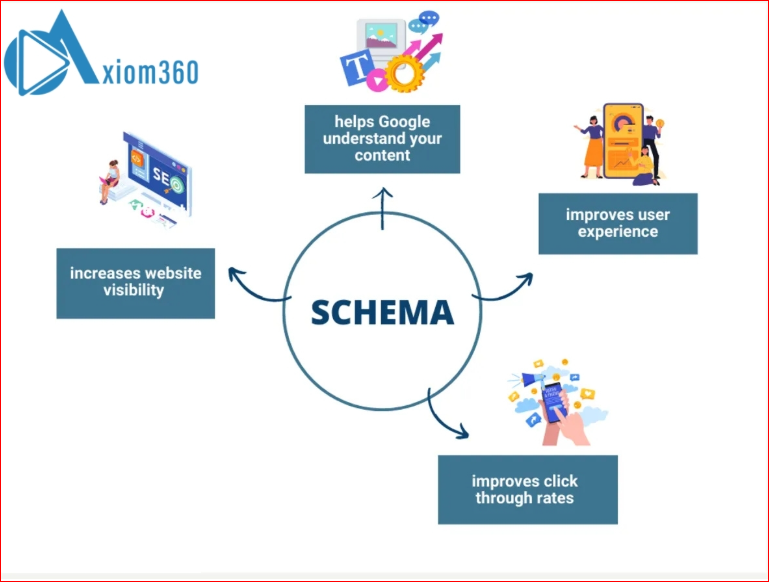
Schema markup matters because of what it enables. When Google can confidently understand your content, it may choose to display your page as a rich result — a search listing that includes additional visual elements like star ratings, product pricing, FAQ dropdowns, author information, recipe details, and more. These enhanced listings take up more real estate on the results page, stand out visually, and tend to attract more clicks.
Here’s why schema markup is important for your broader SEO performance:
- It can significantly increase click-through rates. A page sitting at position three with a rich result — showing star ratings and a price — will often outperform a plain listing sitting at position one. More clicks means more traffic, which signals relevance to Google over time.
- It helps search engines understand ambiguous content. If your page mentions “Jaguar,” schema helps clarify whether you’re talking about the animal, the car brand, or something else entirely. Context matters, and schema provides it.
- It builds credibility and trust. When your listings look professional and informative, users are more likely to trust your brand before they’ve even clicked. That first impression counts.
- It’s increasingly important for AI search. This is a big one in 2026. Tools like Google’s AI Overviews, Perplexity, ChatGPT, and Gemini are actively pulling structured information from the web to generate responses. Properly implemented schema makes your content more legible to these AI systems, giving you a better chance of being cited or featured in AI-generated answers. This is where schema markup intersects with Answer Engine Optimization (AEO) and Generative Engine Optimization (GEO) — two disciplines that are rapidly becoming essential alongside traditional SEO.
The Different Types of Schema Markup
One of the most common questions people ask is: which type of schema should I actually be using? The answer depends entirely on your content and your business.
Let’s walk through the most important types of schema markup in SEO and when to use each one. Here’s a quick-reference table before we dig into each one in detail:
| Schema Type | Best For | Rich Result Potential | Priority |
| Article / BlogPosting | Blog posts, news, long-form content | Top Stories carousel, author info | High |
| Product | E-commerce product pages | Price, availability, star ratings | High |
| Local Business | Physical locations, service areas | Map pack, Knowledge Panel | High |
| BreadcrumbList | All page types | Clean URL path in search listing | High |
| FAQ | Service pages, guides, support content | Q&A dropdowns (limited visibility) | Medium |
| Review | Products, services, books, recipes | Star ratings (must be nested) | Medium |
| Event | Conferences, webinars, live events | Event listings, dates, tickets | Medium |
| Video | Pages with embedded video | Video carousel, video results | Medium |
| HowTo | Step-by-step tutorials | Step-by-step tutorials | Medium |
| Person / Organization | About pages, author pages | Knowledge Panel, E-E-A-T signals | Medium |
Article / Blog Posting Schema
If you publish written content — blog posts, news articles, opinion pieces — Article schema (or its subcategory, BlogPosting) is the foundational markup to add. It signals to Google the headline, author, publication date, and organization behind the content. This helps with author authority, content freshness signals, and eligibility for Google’s Top Stories carousel.
Product Schema
For e-commerce businesses, Product schema is essential. It allows you to mark up product name, description, price, availability, and aggregate review ratings. When implemented correctly, this can unlock rich results that show price and star ratings directly in search — a significant advantage when users are comparing options.
Local Business Schema
If you operate from a physical location — or serve a specific geographic area — Local Business schema is one of the highest-value types you can implement. It communicates your address, phone number, business hours, and service categories to Google, strengthening your local SEO presence and your chances of appearing in map pack results and the Knowledge Panel.
FAQ Schema
FAQ schema lets you mark up question-and-answer content so that Google can potentially display those Q&As as expandable dropdowns directly in the search results. It’s a popular choice for service pages, guides, and support content. Important note: Google has significantly reduced the visibility of FAQ rich results — as of recent updates, they’re primarily reserved for well-known, authoritative government and health websites. So while it’s still worth implementing on the right pages, don’t bank on FAQ rich results as your primary strategy.
Review Schema
Reviews add social proof, and Review schema helps search engines understand and display that proof in results. However, Google now requires Review schema to be nested within a relevant parent schema type (like Product, LocalBusiness, or Recipe) rather than used as a standalone markup. Self-serving reviews used in isolation are no longer supported for rich results.
Event Schema
Planning or promoting events? Event schema allows Google to surface your event details — name, date, location, ticket availability — directly in search results and in Google’s dedicated events experience. This is particularly useful for organizations running conferences, workshops, webinars, or live performances.
How To Schema
For step-by-step instructional content, the HowTo schema helps search engines identify and display your process in a structured way. Similar to FAQ, Google has pulled back on HowTo rich results visibility — they’re now only shown to desktop users — but the markup still helps search engines understand the nature of your content.
BreadcrumbList Schema
Breadcrumb schema replaces the raw URL in your search listing with a clean, readable path — for example, “Home > Blog > SEO > Schema Markup” instead of a long URL string. It’s a small change, but it visually communicates site structure and can improve perceived trustworthiness and click-through rates.
Video Schema
If your pages include video content, Video schema helps Google index and understand that video, making it eligible to appear in video-specific search results and Google’s video carousel.
Person / Organization Schema
These schema types help establish the identity and authority of a brand or individual — critical for E-E-A-T (Experience, Expertise, Authoritativeness, and Trustworthiness) signals. For agencies, consultants, and content-led businesses, this can make a meaningful difference in how Google perceives your credibility.
Schema Markup in SEO: Does It Directly Affect Rankings?

Let’s address this directly, because it’s one of the most misunderstood areas of technical SEO.
No, schema markup is not a confirmed direct ranking factor. But the practical impact on your SEO performance can be significant — just indirectly.
Here’s the chain of events: proper schema implementation → Google understands your content better → your page becomes eligible for rich results → rich results improve your CTR → higher CTR signals relevance and engagement → this can contribute to improved rankings over time.
There’s also the competitive angle. Only around a quarter of all indexed websites currently use schema markup. That means if you implement it well while your competitors haven’t, you’re gaining a real advantage in how your listings appear versus theirs — on the exact same search results page.
The bottom line on schema markup in SEO: it may not push you from position five to position one overnight, but it improves the visibility, credibility, and click performance of the rankings you already have. And in a competitive landscape, that matters enormously.
How to Check Schema Markup on Your Website
Before you implement or fix anything, you need to know what’s already there. Knowing how to check schema markup on your site is step one of any schema optimization process.
Here are the main tools to use:
- Google’s Rich Results Test — Go to search.google.com/test/rich-results and enter any URL. Google will tell you what structured data it detects, whether it’s valid, and whether the page is eligible for rich results. This is your most important schema markup checker.
- Google Search Console — Under the “Enhancements” section, Search Console shows you which schema types have been detected across your site, along with any errors or warnings. It also tracks rich result impressions and clicks over time, so you can see the performance impact.
- Schema.org Validator — At validator.schema.org, you can test your markup directly against Schema.org standards.
- Merkle’s Schema Markup Generator — A useful free tool for generating and testing schema code without needing to write it from scratch.
Running a schema markup checker across your key pages should be part of any technical SEO audit. Common issues include missing required properties, markup that doesn’t match visible page content, and schema types that are incorrect for the page in question.
Schema Markup Optimization: Getting It Right
Implementation is only half the battle. Schema markup optimization is about doing it in a way that actually earns rich results and helps both users and search engines.
Here are the principles that matter most:
- Match your markup to your visible content. This is non-negotiable. Google explicitly requires that your structured data reflects content that users can actually see on the page. If you add FAQ schema but the questions and answers aren’t visible on the page itself, Google will ignore it — or worse, penalize the implementation.
- Use JSON-LD format. Google recommends JSON-LD (JavaScript Object Notation for Linked Data) as the preferred method for implementing schema. It lives in a <script> tag in your page’s <head>, keeping it cleanly separate from your HTML content. This makes it easier to manage and update.
- Don’t over-stuff your pages with schema. Marking up every possible element on a page isn’t a strategy — it’s noise. Focus on the schema types that are genuinely relevant to that page’s content and its primary purpose.
- Complete your schema fully. Partial implementation produces zero rich result lift. If you’re adding Product schema, include the AggregateRating property. If you’re adding Article schema, include the author field. Missing required properties means your page won’t qualify for the enhanced appearance you’re aiming for.
- Layer multiple schema types where appropriate. A blog post can carry Article schema, BreadcrumbList schema, and Author/Person schema simultaneously. A product page can carry Product, Review, and BreadcrumbList. Layering relevant types — without forcing irrelevant ones — is a legitimate and effective strategy.
- Keep your schema updated. Prices change, events pass, staff members move on. An outdated or inaccurate schema can cause Google to flag errors in Search Console and disqualify you from rich results.
Schema Markup for AI Search: The 2026 Consideration
This is worth its own section, because it’s changing how forward-thinking SEOs think about schema.
We’re in a period where AI-powered search tools — Google AI Overviews, ChatGPT’s browse functionality, Perplexity, and others — are increasingly becoming the first touchpoint between a user’s question and your content. These systems don’t just read your page; they interpret it, summarise it, and cite it (or don’t).
Schema markup for SEO has always been about making content machine-readable. In the AI search era, that same principle applies — but the machines making the decisions are far more sophisticated, and the stakes around being cited versus being ignored are higher.
Structured data helps AI systems extract factual, authoritative information from your pages with confidence. Organization schema, Author/Person schema, and FAQ schema are particularly relevant here — they establish who you are, what you know, and what specific questions your content answers.
This is where SEO schema markup begins to merge with AEO and GEO strategy. At Axiom360, we work with clients to implement structured data not just for traditional rich results, but as part of a broader strategy for visibility across both search engines and AI-driven answer platforms.
Common Schema Markup Mistakes to Avoid
Even well-intentioned schema implementations can go wrong. Here are the most frequent pitfalls:
- Using the wrong schema type. Applying Product schema to a blog post, or Event schema to a static about page, confuses search engines and earns nothing. Always match the schema type to the primary content of the page.
- Marking up content that isn’t on the page. As mentioned above, this is explicitly against Google’s guidelines. If the information isn’t visible to users, it shouldn’t be in your schema.
- Leaving schema errors unaddressed. Once you’ve implemented markup, monitor Search Console regularly. Errors accumulate, and unresolved issues can silently cost you rich results across your entire site.
- Expecting schema to compensate for poor content. Schema markup is a tool that helps great content perform better. It won’t rescue a thin, low-quality page or manufacture authority your site hasn’t earned. The foundations still matter.
Do You Need a Schema Markup Service?
For smaller sites with a handful of pages, schema can be implemented manually using JSON-LD code and tools like Google’s Structured Data Markup Helper. WordPress users can get quite far with plugins like Rank Math or Yoast SEO, which automatically generate several schema types based on your content.
But for larger websites — e-commerce stores with thousands of product pages, multi-location businesses, news publishers, or any site where structured data needs to be applied at scale and monitored consistently — working with a specialist makes a real difference.
A professional schema markup service won’t just add code. It involves auditing your current implementation, identifying every page that’s missing relevant schema, correcting errors, layering the right types for each page template, and tracking the impact through Search Console over time.
At Axiom360, schema markup optimisation is part of our broader technical SEO offering. We treat it as an ongoing process, not a one-time task — because search engine guidelines evolve, and so should your structured data strategy.
Frequently Asked Questions
What is schema markup in simple terms?
Schema markup is code added to a web page that tells search engines exactly what the content means — not just what it says. It helps Google display richer, more informative search results.
Is schema markup the same as structured data?
These terms are often used interchangeably, but they’re slightly different. Structured data is the broader concept — any data organised in a standardised format. Schema markup refers specifically to the vocabulary from Schema.org used to create structured data for search engines.
Does schema markup directly improve rankings?
Not directly. But it can improve click-through rates via rich results, help search engines better understand your content, and contribute positively to overall SEO performance over time.
How do I check if my schema is working?
Use Google’s Rich Results Test and Google Search Console. These tools will tell you what schema Google detects on your pages, whether there are errors, and how your rich results are performing.
How often should I update my schema?
Any time the underlying content changes. Prices, dates, staff information, product availability — if the page changes, the schema should too.
Which schema type should I implement first?
Start with what’s most relevant to your primary business pages. For a blog, that’s Article/BlogPosting. For an e-commerce site, Product. For a local business, LocalBusiness. BreadcrumbList is worth adding site-wide.
Final Thoughts
Schema markup isn’t a magic bullet, and anyone who tells you otherwise is overselling it. But it is one of the most underused opportunities in technical SEO — with a meaningful upside and relatively low downside risk when implemented correctly.
In a world where search results are increasingly crowded, and where AI-driven platforms are reshaping how people find information, giving search engines and AI systems a clear, structured understanding of your content is simply good practice. It’s the difference between hoping Google interprets your page correctly and telling it exactly what your page contains.
If you’re not sure where to start — or if you suspect your current schema implementation has errors — a structured data audit is a smart first step.
The team at Axiom360 UK helps businesses across the UK implement and optimise schema markup as part of a comprehensive SEO strategy. Get in touch to find out how we can help your content work harder in search.
About the Author
Owais Maqsood is the Founder & CEO of DGSOL – The Creative Marketing Agency and Optilinko, an AI-powered SEO and marketing data stack built for scalable growth. With 10+ years of experience in SEO, digital marketing, and data-led strategy, he focuses on building systems that turn marketing data into predictable revenue and long-term competitive advantage.
Owais specializes in aligning SEO, PPC, and content with product-led and growth-driven models, helping SaaS and technology businesses improve acquisition efficiency, retention signals, and lifetime value. His work sits at the intersection of AI, search intelligence, and performance marketing, enabling sustainable, investor-ready growth at scale.
Feel free to connect with Owais Maqsood on LinkedIn for insights into SEO, SaaS growth strategies, AI-powered marketing systems, and data-driven digital marketing.